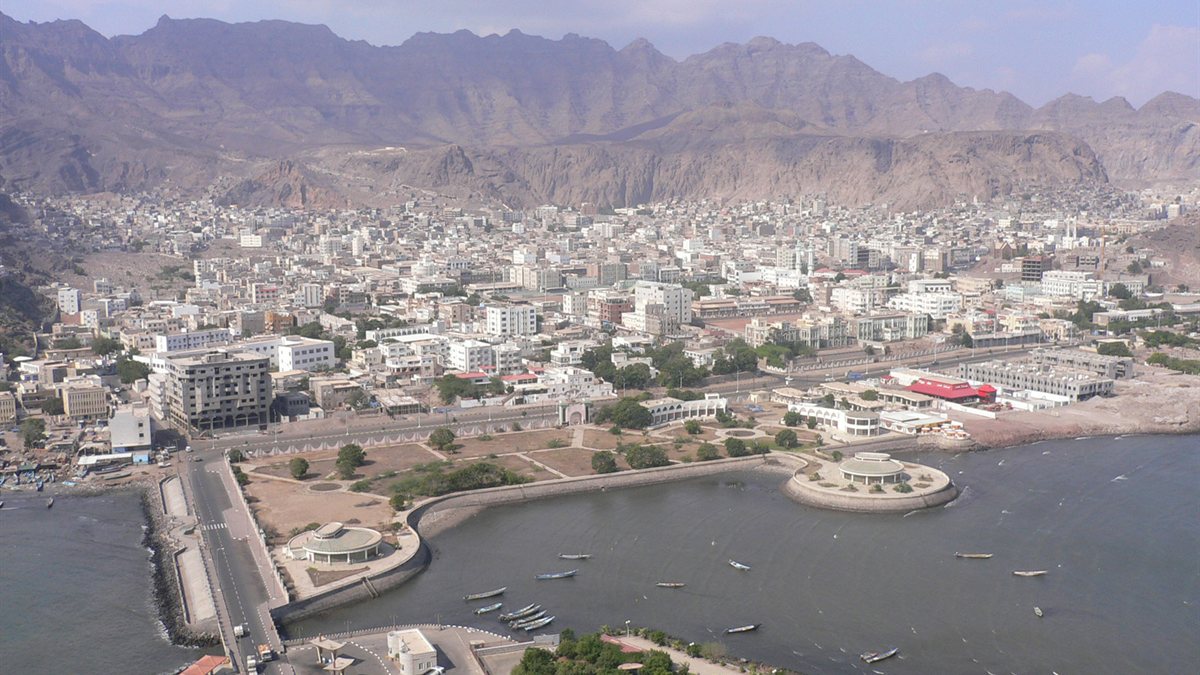
(The Turkish Post) – A Houthi missile and drone strike on the Aden palace that houses Yemen’s internationally recognized government killed at least five people and wounded 16 on Oct. 15, according to Yemen’s health minister, in the first attack on the complex since the country’s civil war flared again this year.
The strike on al-Maashiq palace, in the southern port city that serves as the government’s interim capital, carried the Houthi campaign from Saudi airports and oil sites to the seat of the Saudi-backed government itself. Officials said Prime Minister Shaya al-Zindani and members of his cabinet were unharmed.
Casualty figures from the Aden palace attack differ
Health Minister Qasim Buhaibeh said the dead and wounded included security guards and civilian employees of the palace. Government military sources gave a lower count of at least four killed and 10 wounded. An earlier estimate from an unnamed official put the toll at two dead and six wounded.
Information Minister Moammar al-Eryani said the Houthis fired five missiles at the Aden palace. The government said drones were also used in the attack. Smoke rose over the hill where the palace stands, and residents of nearby neighborhoods fled.
Houthis say they hit a Saudi command center
Houthi military spokesperson Yahya Saree claimed responsibility soon after the strike. The group said it targeted the headquarters of military operations run by Saudi officers inside the Aden palace, along with weapons depots. Neither the Houthi description of the target nor the presence of Saudi officers could be independently verified.
The Houthis have controlled the capital, Sanaa, since 2014. A coalition led by Saudi Arabia intervened on the government’s side in 2015, and the war that followed became one of the world’s worst humanitarian crises before a truce brought several years of relative calm.
Saudi-led coalition reports 20 attacks on Riyadh airport
The Aden palace strike came on the same day that Saudi-led coalition spokesperson Turki al-Maliki told a news conference in Riyadh that the Houthis had attacked King Khalid International Airport 20 times this month. He said those attacks had killed 17 people and injured more than 300.
The deadliest of them, on Oct. 10, killed at least a dozen people at the capital’s main airport. Al-Maliki accused the Houthis of obtaining ballistic missiles, attack drones and explosive-laden boats with help from other countries in the region.
Al-Maliki said the Houthis “must immediately cease all terrorist operations targeting civilians and civilian facilities.” The coalition said on Oct. 15 that it had intercepted drones over Khamis Mushait, a city in southern Saudi Arabia near a major air base, and over other parts of the kingdom’s south.
Saudi Arabia blames Iran for the escalation
Rayed Krimly, the Saudi Foreign Ministry’s deputy minister for public diplomacy, told reporters in a virtual briefing on Oct. 15 that Iran was behind the Houthi campaign. “Iran continues to arm, train and support the Houthi militia in violation of U.N. Security Council resolutions,” he said. “We think that the escalation by the Houthis at this latest stage of the conflict is encouraged by Iran.”
Krimly said Riyadh had asked the Houthis to meet in Muscat, the capital of Oman, at the start of the escalation. “We asked them to meet in Muscat, Oman and they refused,” he said. He described that exchange as the last contact between the two sides.
The fighting in Yemen is part of a wider regional war that began with U.S. and Israeli strikes on Iran in February. The truce that had largely held in Yemen has collapsed. Sources date the return to full-scale war differently, with some placing it in July and others in September, when the Houthis launched a new offensive.
Türkiye weighs support for Saudi Arabia
Türkiye, Saudi Arabia and Pakistan signed a collective defense agreement in Mecca in August under which an armed attack on one of the three is treated as an attack on all. The Turkish and Pakistani parliaments have not yet ratified it.
Türkiye’s Defense Ministry said at its weekly briefing in Ankara on Oct. 15 that the scope of any Turkish military contribution would depend on Saudi Arabia’s needs and requests. The ministry said any deployment would be carried out in line with the Constitution and the relevant laws.
Fighting around Taiz deepens the crisis
Inside Yemen, clashes between the Houthis and government forces have intensified around Taiz, a city the Houthis have surrounded for years and where aid agencies say the health system is near breaking point.
The United Nations envoy for Yemen said earlier this month that the war had returned in full and that Taiz was cut off.