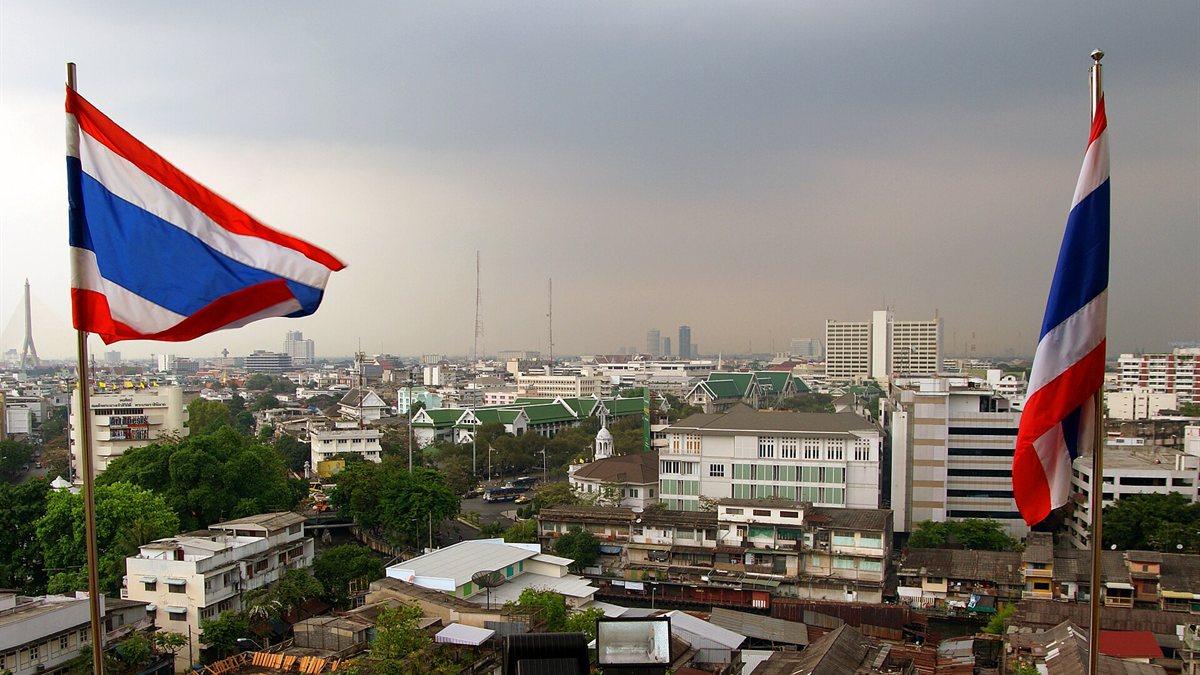
(The Turkish Post) – G20 finance ministers and central bank governors met in Bangkok on Oct. 15 to discuss the economic damage from the U.S.-Israeli war on Iran and rising government debt, without U.S. Treasury Secretary Scott Bessent, whose country holds the group’s presidency this year.
The meeting of G20 finance ministers takes place alongside the annual meetings of the International Monetary Fund and the World Bank, held in the Thai capital from Oct. 12 to 18. It was expected to end without a joint communique, as the previous G20 finance meeting did.
Bessent absent from the G20 finance ministers meeting
U.S. officials said Bessent was missing the Bangkok talks because of “domestic engagements.” Deputy Treasury Secretary Francis Brooke and Under Secretary for International Affairs Erin Browne are representing the United States. As holder of the 2026 G20 presidency, the United States would normally chair the meeting.
The previous gathering of G20 finance ministers, in Asheville, North Carolina, on Aug. 31 and Sept. 1, ended without a joint statement after China objected to language on trade. The Bangkok meeting of G20 finance ministers will help prepare the G20 leaders’ summit in Miami on Dec. 14 and 15.
The United States has pressed other members to act on what it calls “global imbalances,” which it links to China’s state-led industrial model. Bessent has called for action on “non-market policies and practices” and on exchange rates.
Iran war and the Strait of Hormuz dominate the talks
Shipping disruption in the Strait of Hormuz has pushed up global energy prices, and crude oil has traded above $100 a barrel for much of the past eight months. The strain has been heaviest on government budgets and households in the Gulf and across Asia. The IMF has said energy-importing countries that are not benefiting from the boom in AI investment are the most exposed to the shock.
Speaking as G20 finance ministers gathered, Australian Treasurer Jim Chalmers called for an end to the conflicts in the Middle East and for the Strait of Hormuz to reopen, “because that’s what the global economy desperately needs.” He said the war was having a “devastating economic impact.”
IMF forecast for the global economy
In its World Economic Outlook released in Bangkok this week, the IMF raised its 2026 global growth forecast by 0.1 percentage point to 3.1%. The fund said prices of refined petroleum products remained 70% to 95% above their levels before the war.
The IMF expects global inflation to reach 4.7% this year, driven by energy costs and a boom in investment in artificial intelligence, before easing to 4.1% in 2027. It sharply lowered its forecasts for Gulf economies, including Saudi Arabia, and expects the Middle East and Central Asia region to shrink by 0.3% in 2026.
The fund’s baseline assumes that the Strait of Hormuz reopens in March 2027 and that conditions return to their prewar state by October 2027. IMF officials said the risks to the outlook were tilted to the downside and warned that a longer conflict could push inflation higher and weaken public finances.
Georgieva warns on government debt
IMF Managing Director Kristalina Georgieva warned in a speech on Oct. 14 that mounting public debt posed a threat to the global economy. She said there was no “magic” formula that would let governments avoid tax increases or spending cuts.
Public debt exceeds 100% of gross domestic product in the United States, Canada, Japan, Italy and France. World Bank Group President Ajay Banga is also attending the meetings, and U.S. Federal Reserve Chairman Kevin Warsh is scheduled to appear at a public event with Georgieva on Oct. 16.
The G20 brings together 19 national economies, the European Union and the African Union, and its presidency rotates each year. Türkiye is a founding member of the group, which was created in 1999 as a forum for finance ministers and central bank governors and held its first leaders’ summit in Washington in 2008 during the global financial crisis.