(The Turkish Post) – A magnitude 7.7 Panama earthquake injured 27 people on Friday, Oct. 9, and brought down one of the two towers of the cathedral in the central city of Penonomé, the country’s civil protection agency said on Saturday.
No deaths or missing people had been reported by early Saturday, when the National Civil Protection System (Sinaproc) released its latest count. About 300 people were evacuated, and five communities in Los Santos province were cut off after landslides and damage to roads and bridges.
President José Raúl Mulino said the country was facing “a major disaster.” Earthquakes of this size are rare in Panama, and the quake was felt across the country of about 4.5 million people.
How the Panama earthquake unfolded
The quake struck at 12:56 local time (17:56 GMT) at a depth of about 12.6 kilometers, according to the U.S. Geological Survey, which first put the magnitude at 8.0 before revising it. The epicenter lay near Pitaloza Arriba, a sparsely populated area of Herrera province, about 200 kilometers from Panama City.
Buildings swayed in the capital and residents ran into the streets. The shaking was also felt in neighboring Colombia and as far as San José, Costa Rica.
A magnitude 6.6 aftershock hit a few hours later, followed by dozens of smaller tremors through Friday afternoon and evening.
Tsunami warning lifted along the Pacific coast
Shortly after the main shock, the U.S. Pacific Tsunami Warning Center issued a tsunami warning for possible waves along the Pacific coasts of Panama, Colombia, Ecuador, Nicaragua and Guatemala. The center later said the threat had passed. Chile’s navy issued a precautionary tsunami alert for Easter Island.
Penonomé cathedral among damaged buildings
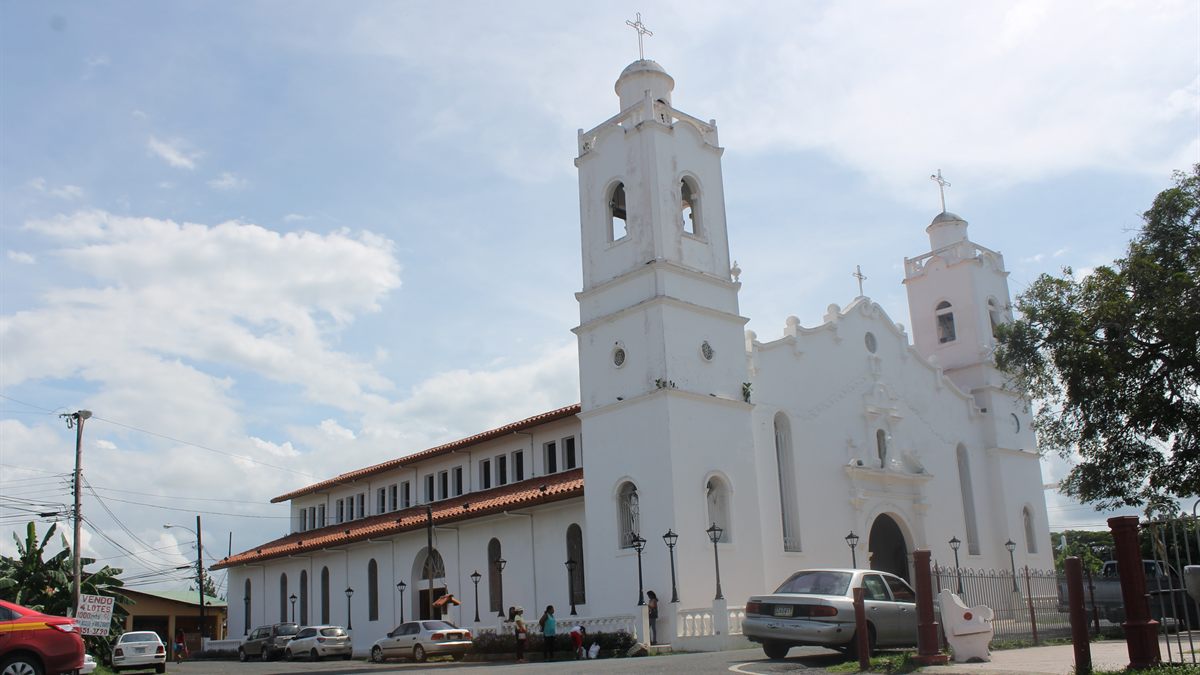
The heaviest damage was in the provinces of Coclé, Herrera, Los Santos and Veraguas, officials said. In Penonomé, the capital of Coclé, one of the two towers of the Penonomé cathedral, the Cathedral of San Juan Bautista, collapsed.
One side of the Coclé governor’s building also collapsed and the other side cracked. Staff were evacuated safely. Part of the Dos Continentes hotel in the city caved in, and debris fell onto cars below. Eight families in Coclé were moved to a shelter.
Coclé alone recorded 17 of the injured. In Los Santos, 14 homes, five hotels, four hospitals and 22 schools were partly damaged.
Sinaproc’s count lists damage to 142 homes, 188 schools, 20 health facilities, 26 government buildings, 13 churches, seven hotels and nine bridges across the country.
Power cuts, flights halted, classes suspended
Electricity provider Naturgy said power was down across six provinces after the Panama earthquake. Tocumen International Airport, the country’s main air hub, suspended flights for several hours before resuming them on Friday evening. Panama City’s metro also halted service for safety checks.
The Education Ministry suspended classes at schools nationwide. The Panama Canal, about 200 kilometers from the epicenter, kept operating normally, and ship traffic through the waterway continued.
Government response to the Panama earthquake
Mulino traveled to Penonomé on Friday with Government Minister Dinoska Montalvo. He wrote on X that they were touring the affected areas to “quickly coordinate aid and solutions” for those hit by the quake. In an earlier post he said what happened “should not be used to generate alarm and disorder.”
U.S. Secretary of State Marco Rubio said he was closely monitoring the Panama earthquake and that, at the request of the Panamanian government, the State Department was mobilizing resources and personnel to assist.
A rare event in Panama’s history
Most strong earthquakes in Panama strike the western province of Chiriquí, near the border with Costa Rica. The largest quake in the country’s recorded history hit the northern coast on Sept. 7, 1882, and set off a tsunami that drowned about 75 people in what is now the Guna Yala region on the Caribbean coast. In 1991, an earthquake centered in Limón, Costa Rica, killed dozens of people in Panama’s Bocas del Toro province.
The Panama earthquake follows deadly twin quakes in Venezuela in June and a magnitude 7.4 quake in western Colombia in August.