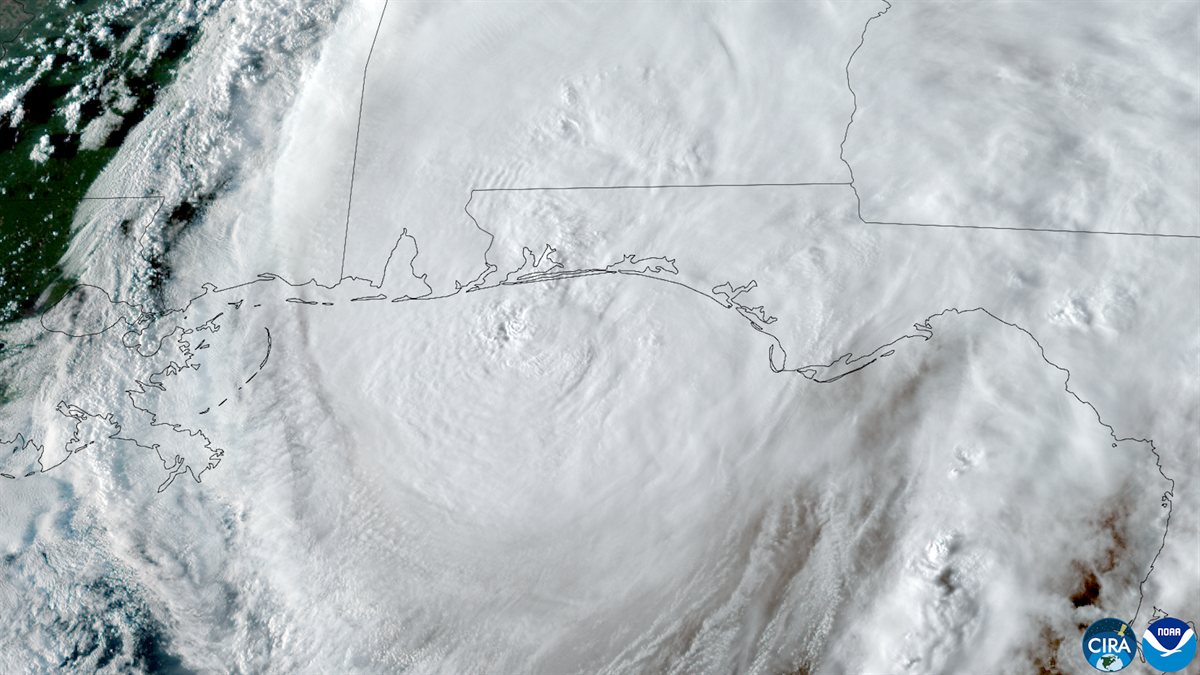
(The Turkish Post) – Hurricane Isaias left more than 800,000 homes and businesses without power across Florida, Alabama and Georgia on Saturday, Oct. 10, after making landfall near Destin on the Florida Panhandle as a Category 2 storm with winds of 105 mph (169 kph).
Hurricane Isaias, the first hurricane of the 2026 Atlantic season, weakened quickly over land. By early Saturday the U.S. National Hurricane Center had downgraded it to a post-tropical cyclone over southern Alabama, but forecasters warned that heavy rain, flash flooding and tornadoes remained a threat across the Southeast.
No deaths had been reported by Saturday morning, and officials said the full extent of the damage was not yet known.
How Hurricane Isaias hit the Gulf Coast
The storm reached the Florida Panhandle on Friday evening, Oct. 9. Earlier on Friday it had briefly strengthened into a Category 3 hurricane with winds of 120 mph (193 kph) before easing slightly ahead of landfall. Florida Governor Ron DeSantis said Isaias was a Category 2 hurricane when it came ashore.
Once inland, the storm lost strength fast. It dropped to Category 1 late on Friday and became a post-tropical cyclone in the early hours of Saturday, still carrying tropical storm-force winds.
Hurricane Isaias is the first hurricane to make landfall in the United States since Milton struck Florida’s Gulf Coast in 2024.
At 2 a.m. EDT on Saturday, the center of the storm was about 55 miles (89 km) south-southwest of Montgomery, Alabama, with maximum sustained winds of 65 mph (105 kph). It was moving north at about 20 mph, and forecasters expect its remnants to reach the Tennessee Valley by Sunday.
Power outages from Hurricane Isaias
Outage numbers climbed through the night as the storm moved inland. Utility tracking data showed about 668,000 customers without power around midnight and more than 800,000 by Saturday morning.
Florida accounted for more than 400,000 of the outages on Saturday morning and Alabama for more than 300,000. Georgia had more than 50,000 customers without power by Saturday morning.
Most flights were grounded on Friday at several airports in the Florida Panhandle, including all flights in and out of Destin-Fort Walton Beach Airport.
Damage in Pensacola and Destin
In Pensacola, strong winds tore the roof off an inn, and police warned residents to stay off the streets because of debris on the roads. Roads in Destin were flooded.
In southeastern Alabama, Houston County closed its roads because of fallen trees and power lines.
Tens of thousands of people along the northern Gulf Coast had been ordered to leave their homes before the storm arrived. DeSantis said many low-lying and coastal areas of the Panhandle were under evacuation orders.
Flash flooding and tornado risk remain
Forecasters expect 4 to 8 inches (10 to 20 cm) of rain across southern Alabama, the Florida Panhandle, Florida’s Big Bend coast and southwest Georgia, with up to 15 inches (38 cm) in places. The National Hurricane Center warned of flash, urban and river flooding as the storm’s remnants move north. Flash flooding is also possible farther inland, into the southern Appalachians.
Tornadoes are possible on Saturday across the eastern Florida Panhandle, Georgia and the Carolinas.
Federal emergency declarations approved
The Trump administration approved federal emergency declarations for Florida and Alabama on Friday night, allowing the Federal Emergency Management Agency to support state and local responders. Homeland Security Secretary Markwayne Mullin announced the approvals on social media.
“We’re watching it very closely, the hurricane,” President Donald Trump told reporters outside the White House. He said the situation was “under control.”
DeSantis had declared a state of emergency in 25 Florida counties before Hurricane Isaias arrived. Alabama Governor Kay Ivey also declared a state of emergency, saying it “will help cut tape for our federal partners.”