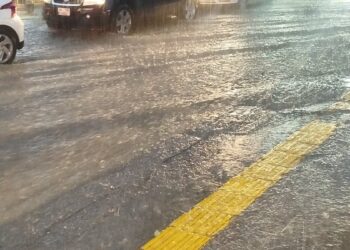
(The Turkish Post) – Spain floods killed at least two people in the east of the country as Storm Adam dropped record rain on the Mediterranean coast on Oct. 18 and 19, 2026, pushing authorities to order more than 800,000 residents to stay in their homes.
The storm turned streets into torrents across the Valencia region and parts of Catalonia, swept away cars and trapped residents on rooftops. Spain’s national weather agency, known as AEMET, issued several red warnings, its highest alert, and told people to avoid travel and move to higher ground.
Spain floods kill at least two in the east
Authorities said two women died over the weekend. One body was found on a beach in Sagunto, in Valencia province. The other woman was swept away by floodwater in Cabrera de Mar, near Barcelona. Some later accounts put the toll at four, but officials had confirmed two deaths by Oct. 19.
Rescue teams used helicopters to lift people from rooftops in towns cut off by the water. In Pego, the mayor, Enrique Moll, said several residents were still waiting to be airlifted and that every road into the town was blocked, with even heavy military vehicles unable to reach some areas.
Storm Adam drops the heaviest rain since 1987
Some areas received more than 600 millimeters (24 inches) of rain over 48 hours, the most recorded since 1987, according to AEMET. The agency described conditions as “extremely adverse.” The towns of Pego and Oliva, on the border of Valencia and Alicante provinces, were among the hardest hit.
“They have to stay on top of tables and furniture to avoid getting wet,” said Salvador Llopis, the deputy mayor of Oliva, describing residents trapped by the rising water. Footage from the region showed vehicles carried along flooded streets and ground floors under water.
What drove the storm
The Spain floods were set off by a weather pattern Spaniards call a cold drop, or “gota fría,” when a mass of cold air passes over the warm Mediterranean in autumn. The clash builds tall storm clouds that can drop a season’s worth of rain in a few hours.
In the east, mountains sit close to the coast, so the water pours into narrow riverbeds and dry channels that can fill within minutes. Towns built beside those channels are exposed when the rain is at its heaviest.
Valencia region told to shelter in place
The regional government ordered more than 800,000 people to stay home as the water rose. Classes were suspended for more than 100,000 students in the Valencia region, and the central government deployed military and national police emergency units to help with the rescues.
Trains were suspended and roads closed across the region as the Spain floods spread inland, and some hospitals and care homes moved patients to upper floors.
“Road travel is impossible, you must stay at home,” said Juan Carlos Valderrama, the Valencia region’s emergency chief. Prime Minister Pedro Sánchez wrote that “rescue operations are continuing in areas that are difficult to access” and called the situation in the region “very difficult.”
Echoes of the 2024 disaster
The flooding revived memories of October 2024, when a storm killed more than 230 people in the Valencia region, most of them in a single afternoon. That was the deadliest flooding in Spain in decades, and it drew heavy criticism of how warnings were issued and how slowly help reached the worst-hit towns.
The 2024 disaster set off months of protests and political argument over who was to blame for the late warnings. The latest Spain floods reopened that debate within hours.
Scientists say the intense autumn storms that strike eastern Spain are being made worse by a warming climate, which lets the Mediterranean hold and release more moisture. AEMET said September 2026 was mainland Spain’s hottest September on record, after its warmest summer.
Officials said measuring the damage from the Spain floods would take days, with farmland in the citrus belt around Valencia and Alicante among the areas hit. Emergency services told residents to follow official instructions and keep off flooded roads until the alerts were lifted.