(The Turkish Post) – Türkiye and 18 other Arab and Muslim-majority countries condemned Colombia’s new Jerusalem embassy on Oct. 16 in a joint statement, with their foreign ministers saying the move violates international law and has “no legal effect.”
Colombia opened the embassy on Oct. 14, becoming the tenth country with an embassy in Jerusalem, a city whose status is one of the central disputes between Israelis and Palestinians.
Joint statement rejects the Colombia Jerusalem embassy
The statement was released by Türkiye’s Foreign Ministry and signed by the foreign ministers of Türkiye, Algeria, Djibouti, Egypt, Indonesia, Jordan, Kuwait, Lebanon, Libya, Malaysia, Oman, Pakistan, Palestine, Qatar, Saudi Arabia, Somalia, Sudan, Syria and Yemen.
The ministers expressed their “unequivocal rejection” of the Colombian decision and said it breaches relevant UN Security Council resolutions. They said any measure that aims to alter the status of Jerusalem or recognize it as Israel’s capital “is null and void and has no legal effect.”
They cited Security Council resolutions 476 and 478, adopted in 1980, which reject attempts to change the city’s status and call on countries to withdraw their diplomatic missions from Jerusalem. The statement describes the city as part of the Palestinian territory occupied in 1967.
The ministers called on Colombia’s government to reconsider and reverse the decision, to uphold its obligations under international law and to refrain from steps that prejudice the rights of the Palestinian people. They reaffirmed their support for an independent Palestinian state with East Jerusalem as its capital.
The Palestinian Foreign Ministry had already condemned the opening on Oct. 14, calling it “a violation of international law and relevant United Nations resolutions.”
Colombia’s embassy opens in West Jerusalem
Colombian Foreign Minister Omar Bula Escobar and Israeli Foreign Minister Gideon Saar cut the ribbon at the embassy in West Jerusalem on Oct. 14. Jerusalem Mayor Moshe Lion and Colombia’s ambassador to Israel, Tania Gilinski, also attended. The mission is housed in the Salameh Building on Rabbi Akiva Street, and Saar had announced the opening on Oct. 8.
“Opening an embassy in Jerusalem is not only recognition of the simple political fact that Jerusalem is Israel’s capital,” Saar said at the ceremony. “It is also recognition of a historical truth that no honest person can deny.”
The other countries with embassies in the city are the United States, Guatemala, Honduras, Kosovo, Papua New Guinea, Paraguay, Fiji, Somaliland and Nauru. Most countries keep their embassies in Tel Aviv. Saar said the Democratic Republic of Congo would open the 11th Jerusalem embassy, and Israel has said it will open an embassy in Kinshasa at the same time.
De la Espriella reverses Petro’s break with Israel
The opening of the Jerusalem embassy completes a sharp turn in Colombia’s foreign policy under President Abelardo de la Espriella, who took office in August. He had pledged before his election to move the embassy to Jerusalem.
His predecessor, Gustavo Petro, cut diplomatic ties with Israel in May 2024 over the war in Gaza. De la Espriella’s government restored relations after taking office and has reversed several other measures of the Petro era.
Saar met de la Espriella before his inauguration and wrote afterward that “The golden age in relations between Colombia and Israel begins today.”
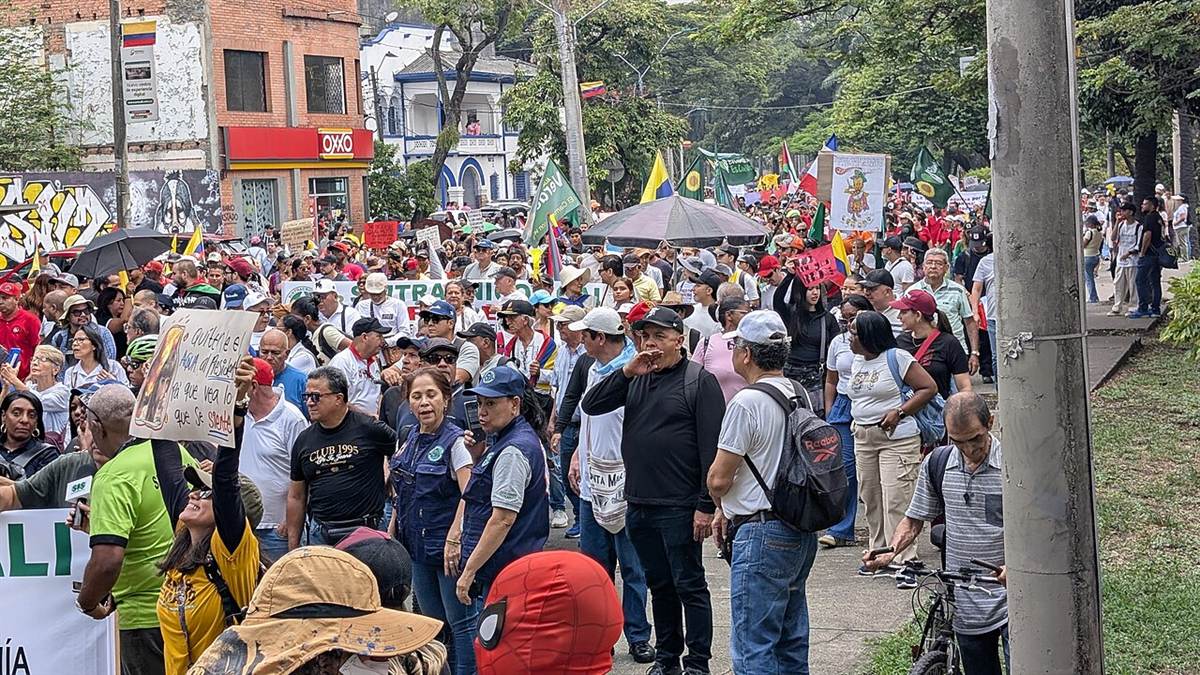
The Jerusalem embassy decision has drawn protests inside Colombia. Demonstrators marched in Bogota on Oct. 14 against the government’s Israel policy, including the embassy move.
Türkiye’s position on Jerusalem
Türkiye has opposed every Jerusalem embassy move. After the United States recognized the city as Israel’s capital in December 2017, Türkiye hosted an emergency summit of the Organization of Islamic Cooperation in Istanbul, and it called a second one in May 2018 when the U.S. embassy opened in Jerusalem.
Ankara recognizes East Jerusalem as the capital of a Palestinian state, the position restated in the Oct. 16 statement.