

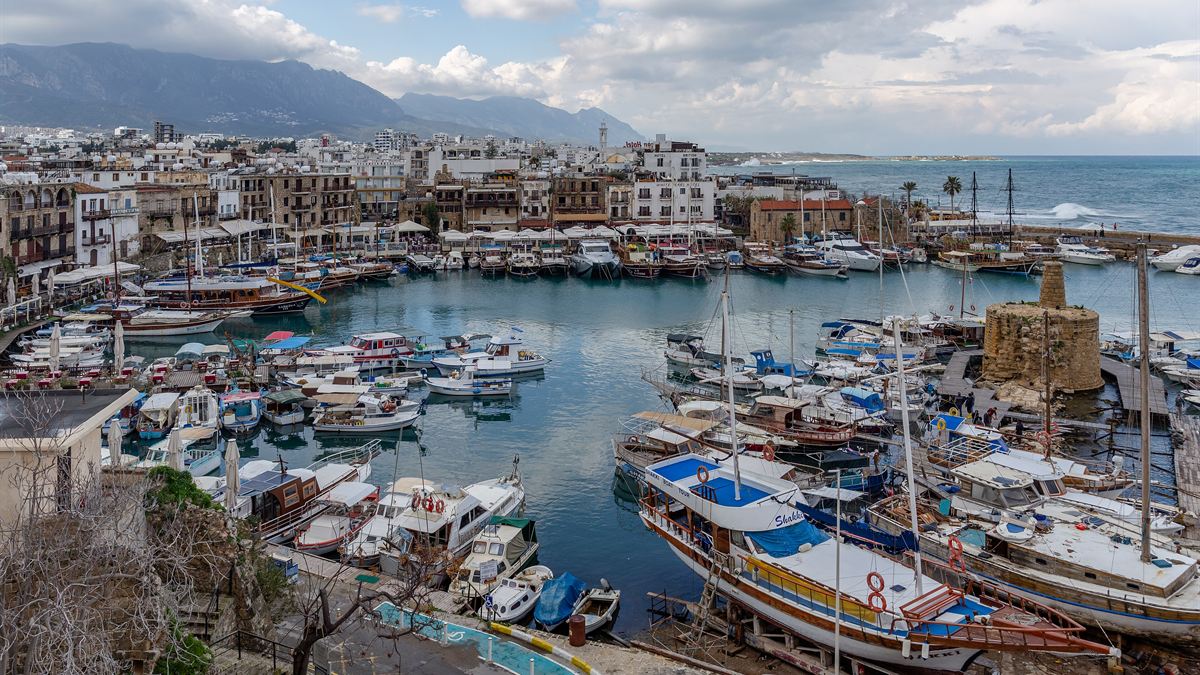
(The Turkish Post) – Türkiye’s research vessel Oruç Reis has reached waters off Kyrenia, known in Turkish as Girne, in Turkish Cyprus while mapping the seabed for a planned gas pipeline between the two, Turkish media reported on Saturday, Oct. 10.
The ship is surveying the route of a 101-kilometer line that would run from Anamur, in Mersin province on Türkiye’s southern coast, to Teknecik, east of Kyrenia. Officials aim to complete technical work this year, begin producing pipes next year and bring the pipeline into service in 2028.
Oruç Reis maps the seabed
Oruç Reis left Anamur at the start of October to produce three-dimensional images of the seabed along the route. Türkiye issued a maritime safety notice, known as a NAVTEX and numbered 0953/26, for the work through its hydrographic station in Antalya, covering the period from Oct. 1 to Oct. 25.
The vessel is working with three support ships, the Denar Pathfinder, the Denar Echo and the Kırıcı. In July, Oruç Reis carried out an earlier survey on a shorter section of the route south of Anamur, under a notice that ran until Aug. 30.
Oruç Reis, built at a shipyard in Istanbul, is Türkiye’s main seismic research vessel and entered service in 2017. It was at the center of a standoff with Greece in the eastern Mediterranean in 2020, when Athens and Ankara traded accusations over overlapping claims to maritime areas.
A two-way gas pipeline
Of the planned gas pipeline’s 101 kilometers, 97 would run under the Mediterranean and four over land. The project envisages two lines. One would carry natural gas from Türkiye to Turkish Cyprus. The other would be used to send gas from future discoveries in the region through Türkiye to Europe.
Turkish Cyprus, officially the Turkish Republic of Northern Cyprus, is recognized only by Türkiye. It generates most of its electricity from fuel oil at power stations, including the plant at Teknecik, the planned landing point of the pipeline.
Türkiye already supplies the island’s north with water through a subsea pipeline from the Anamur area that was completed in 2015. It was designed to carry 75 million cubic meters of water a year from the Alaköprü Dam.
Agreement with Turkish Cyprus
The project is based on an agreement signed on July 10 by Turkish Vice President Cevdet Yılmaz and Turkish Cypriot Prime Minister Ünal Üstel.
The foreign ministry of the Greek Cypriot administration in the south of the island declared the agreement illegal within hours of its signing. Greece has also objected to Turkish survey work in the region.
Türkiye says surveys and cable-laying in areas where it claims continental shelf rights require prior coordination with Ankara. Ankara has applied that position to a planned electricity cable that would link Greece, through Crete, with the Greek Cypriot administration and Israel.
Energy rivalry in the eastern Mediterranean
Cyprus has been divided since July 1974, when Türkiye intervened militarily after a coup backed by the military government then ruling Greece. President Recep Tayyip Erdoğan visited the north in July 2024 for the 50th anniversary of the intervention. In 2004, Turkish Cypriots voted in favor of a UN reunification plan, while Greek Cypriots rejected it, and the Greek Cypriot administration joined the European Union the same year. The last round of reunification talks collapsed in Crans-Montana, Switzerland, in 2017.
Gas discoveries off Cyprus, Israel and Egypt since the late 2000s have turned the eastern Mediterranean into an arena of competing energy projects. Türkiye and the Turkish Cypriot administration argue that Turkish Cypriots have equal rights to any oil and gas resources found around the island.


