(The Turkish Post) – A Pentagon plan to livestream the firing squad execution of Fort Hood gunman Nidal Hasan drew criticism from both U.S. parties and the United Nations on Friday, Oct. 9, and Vice President JD Vance said he doubted the broadcast would go ahead.
Hasan, a former Army psychiatrist, is set to be executed at Fort Hood, Texas, on Dec. 3. It would be the first execution carried out by the U.S. military in 65 years, and its first by firing squad since World War II.
Vance says he would not watch
Speaking to reporters on Friday, Vance questioned whether the execution would be streamed at all. “I don’t know that that’s actually going to happen,” he said, adding that “if it’s through livestream, I’m not going to be watching it.”
Hours later, President Donald Trump said he “absolutely” approved of the plan, but that the Pentagon was still “making a determination” on whether to stream it.
The Pentagon said on Thursday that the execution of Nidal Hasan would be livestreamed, after Defense Secretary Pete Hegseth had described it as a public execution. Hegseth called the decision a “no-brainer” and said it would send a message about the punishment for treason and terrorism in the military.
Lawmakers condemn the livestream plan
Criticism came from both parties. Republican Sen. Thom Tillis called the plan “beyond disgusting,” and Sen. Jack Reed, the top Democrat on the Senate Armed Services Committee, described it as a “barbaric spectacle.”
The UN human rights office said that livestreaming an execution would amount to a public execution and would breach the absolute ban on torture under international law.
Lawmakers were split, with some Republicans backing Hegseth’s argument that a broadcast would send a message, while others in the party joined Democrats in opposing it.
The last public execution in the United States took place in Kentucky in 1936. Since then, executions have been carried out inside prisons in front of a small number of approved witnesses.
Firing squad approved by Trump
Trump signed the execution order on Oct. 2, approving Hegseth’s recommendation that Hasan be put to death by firing squad. Acting Army Secretary Adam Telle set the execution for 1 p.m. local time on Dec. 3 at Fort Hood, the base where Hasan carried out his attack.
The U.S. military last executed a soldier in 1961. Under military law, a death sentence cannot be carried out until the president approves it. In 2008, President George W. Bush approved the execution of another soldier, Ronald Gray, but federal courts halted it and the case remains unresolved.
Nidal Hasan is one of four men on the military’s death row, held at the U.S. Disciplinary Barracks at Fort Leavenworth in Kansas.
Hasan is entitled to challenge his death sentence in civilian federal courts, a process that could delay the execution indefinitely. It is not clear whether he plans to appeal.
Nidal Hasan’s 2009 attack at Fort Hood
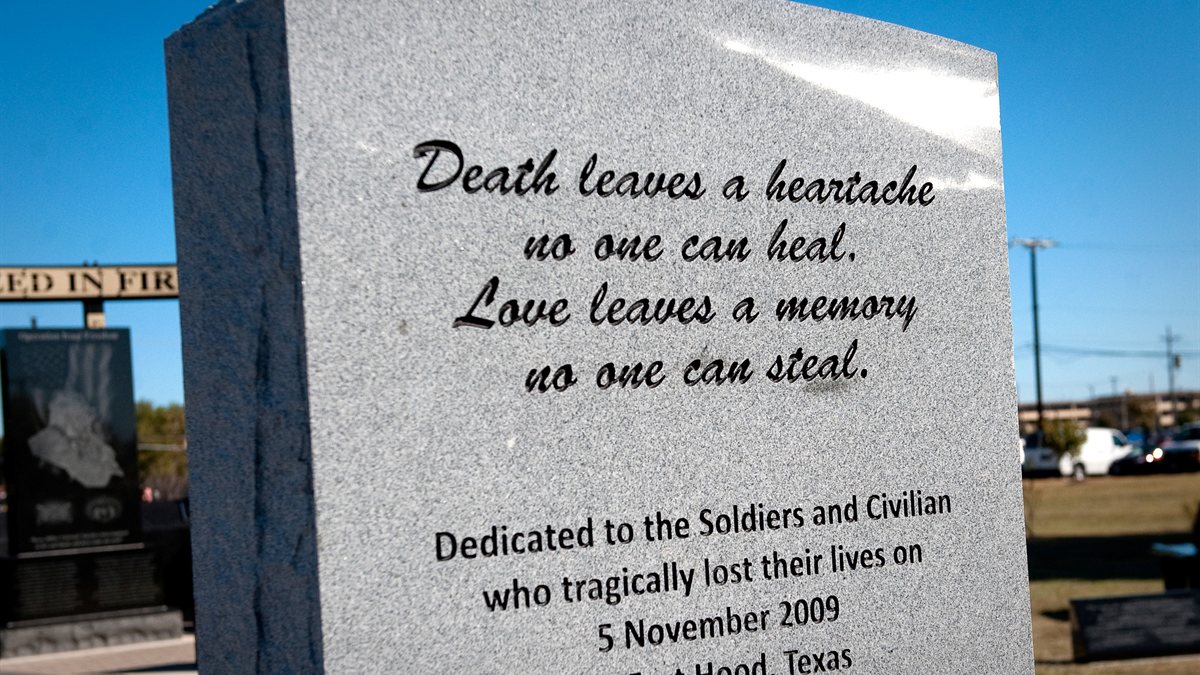
On Nov. 5, 2009, Nidal Hasan, then an Army major, opened fire at a soldier processing center at Fort Hood, killing 12 soldiers and a civilian and wounding more than 30. He had been preparing to deploy to Afghanistan. It remains one of the deadliest attacks on a U.S. military base.
Hasan, who was paralyzed from the waist down after police shot him during the attack, represented himself at his court-martial. A military jury convicted him of 13 counts of premeditated murder and sentenced him to death in August 2013.
The U.S. government classified the shooting as workplace violence for several years, a decision criticized by victims’ families, who later received the Purple Heart and other benefits after Congress changed the rules in 2015.