

(The Turkish Post) – The Gaza ceasefire marked its first anniversary on Saturday, Oct. 10, with more than 1,400 Palestinians killed since it took effect, according to Gaza’s Health Ministry. More than 100 aid and rights groups said this week that the truce “exists in name only.”
The ceasefire between Israel and Hamas began on Oct. 10, 2025, under a U.S.-backed plan to end the war that began with the Hamas attack on southern Israel on Oct. 7, 2023. A year on, Israel controls more than 60 percent of the Gaza Strip, reconstruction has not started, and most of the territory’s 2.1 million people live in tents or damaged buildings.
Deaths continue under the Gaza ceasefire
Israeli attacks since the start of the Gaza ceasefire have killed more than 1,400 Palestinians, including at least 327 children, and wounded nearly 5,000, according to the Health Ministry. Aid groups say the true number is likely higher because the ministry counts only deaths recorded at hospitals or officially registered.
The chief executive of Save the Children said nearly one child had been killed every day since the ceasefire was announced.
Israel says its strikes target militants and accuses Hamas of violating the agreement by refusing to disarm. The Israeli military said recent strikes in Gaza City and Khan Younis were aimed at weapons storage sites belonging to Hamas and Islamic Jihad. Palestinian factions denied this.
Israel holds most of the Strip
Under the agreement, Israeli ground forces were to pull back to a boundary known as the Yellow Line, described as an initial withdrawal line. Human Rights Watch said Israel has since moved the line westward beyond the agreed limits, and that the area on the Israeli side now covers about 64 percent of the Strip.
UN figures show that areas under Israeli access restrictions cover roughly the same share of Gaza, where Palestinians are barred from most places and aid groups must coordinate their movements in advance.
Humanitarian aid and shelter
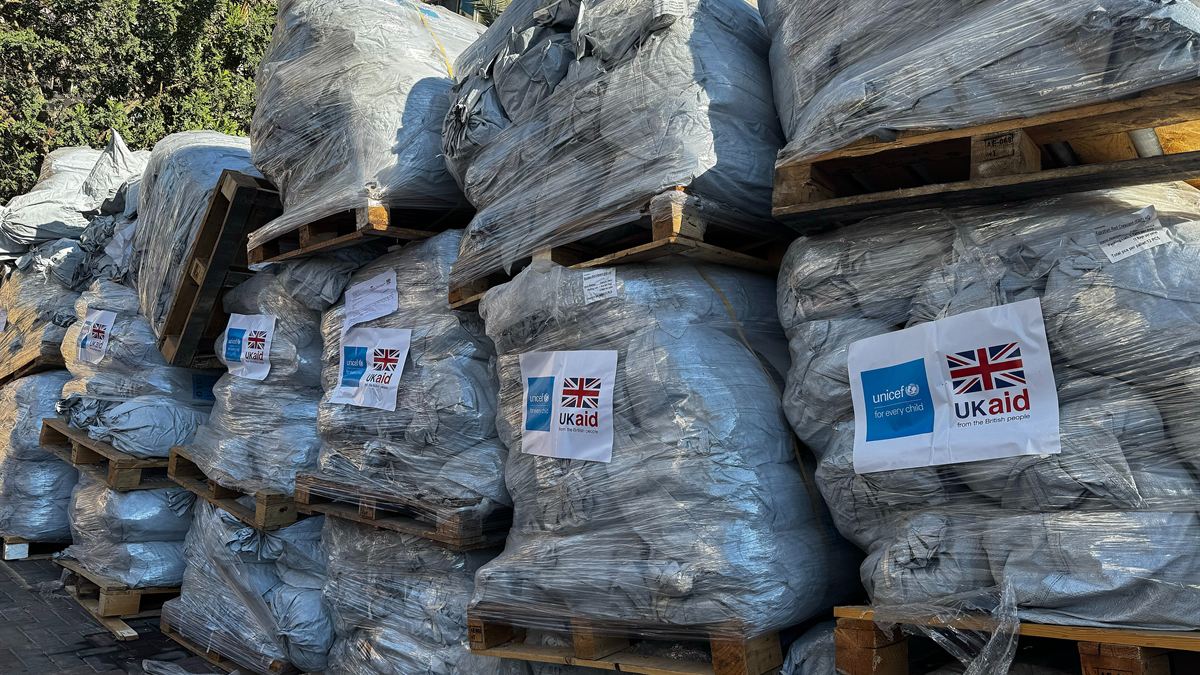
The joint statement by more than 100 organizations, including Amnesty International, Oxfam, Save the Children and the Norwegian Refugee Council, said almost 2 million people in Gaza need shelter and 80 percent of structures are damaged.
“Israeli restrictions are still preventing the required equipment or materials, which are the only ways for communities to begin rebuilding their lives,” said Jan Egeland, secretary-general of the Norwegian Refugee Council.
Human Rights Watch said humanitarian aid volumes remain far below what is needed and that access routes have been repeatedly obstructed. It said a six-month recovery program presented by the Board of Peace on Sept. 23 had not begun.
“There is nothing normal about living in a tent under bombardment, without enough food or drinking water for your family,” said Sarah Sanbar, the group’s acting Israel and Palestine researcher.
A UN-backed food security body declared famine in Gaza in August 2025. The United Nations lifted the declaration in December after the ceasefire allowed more supplies into the territory, but aid workers say hunger and malnutrition remain widespread.
Türkiye calls for accountability
Türkiye was one of the countries that signed the declaration backing the Gaza ceasefire at a summit in Sharm el-Sheikh, Egypt, in October 2025, along with the United States, Egypt and Qatar.
Speaking at the International Justice Summit in Istanbul on Oct. 9, President Recep Tayyip Erdoğan said the international community had failed to respond to Israel’s actions in Gaza and that international law was “almost suspended.” He put the death toll in Gaza since October 2023 at more than 74,000 people.
Erdoğan said Türkiye had applied to join the genocide case against Israel at the International Court of Justice and had halted its trade with Israel. He described Gaza as “the world’s largest concentration camp.”


